Informational Resource

Sandwich Delivery Systems Overview

A comprehensive educational guide to understanding how sandwich delivery systems are organized, structured, and operated — from order intake to final delivery endpoint.

This is an independent informational resource not affiliated with any restaurant or delivery service. No ordering, delivery, or payment services are provided here.

5

Core System Layers

8+

Process Stages

360°

Operational Coverage

24/7

System Monitoring

Understanding the Delivery System

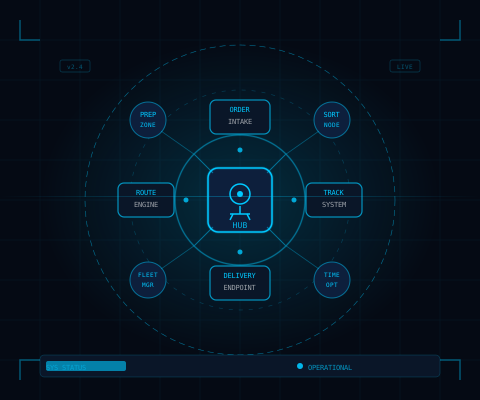
Sandwich delivery systems involve a layered architecture of interconnected components working in concert to move products from preparation to destination with precision and efficiency.

01

System Structure

Learn about the foundational components of delivery systems, including intake layers, dispatch nodes, routing engines, and fleet management frameworks that form the backbone of any delivery operation.

Learn More →
02

Operations Flow

Follow the step-by-step sequence of a sandwich delivery operation from initial order capture through preparation, packaging, dispatch, transit, and final handoff confirmation at the delivery endpoint.

Learn More →
03

Delivery Optimization

Explore the methods and technologies used to improve delivery efficiency, reduce transit times, minimize operational costs, and enhance the overall reliability of sandwich delivery networks.

Learn More →

How the System Works

A sandwich delivery system is not simply a person carrying food from point A to point B. It is a sophisticated operational framework consisting of multiple interconnected layers, each performing a specific role in ensuring the product reaches its destination in optimal condition and within a defined time window.

At its core, the system integrates order management technology, food preparation workflows, packaging standards, logistics routing, and real-time tracking infrastructure into a cohesive end-to-end pipeline.

Understanding each layer and its interactions is essential for anyone studying how modern food delivery networks are designed and maintained.

01

Order Intake

Customer request enters the system through a digital or phone channel, triggering the order management module.

02

Preparation & Packaging

The kitchen executes the order per specification, with quality control checkpoints before packaging for transit.

03

Dispatch & Routing

A routing engine assigns the order to an available delivery agent and calculates the optimal path to destination.

04

Transit & Confirmation

The delivery agent travels the route while the system monitors progress and confirms successful handoff.

Key System Components

Every functional delivery system relies on a set of distinct components that collaborate to execute operations reliably and at scale.

Order Management System (OMS)

The OMS is the front-line layer that captures, validates, and routes incoming orders. It maintains order state throughout the lifecycle and communicates with downstream modules including the kitchen display and dispatch engine.

Kitchen Execution System

This component governs food preparation workflows within the production facility. It includes task sequencing, inventory draw-down, quality assurance checkpoints, and handoff signaling to the packaging and dispatch stages.

Routing & Dispatch Engine

The routing engine processes geographic data, real-time traffic conditions, driver availability, and order urgency to determine the most efficient assignment and path for each active delivery. It is the operational intelligence center of the system.

Fleet Management Module

Responsible for overseeing delivery agents and vehicles, this module tracks location telemetry, manages scheduling, monitors performance metrics, and ensures compliance with operational protocols across the entire delivery fleet.

Ready to Go Deeper?

Explore each section of the delivery system in detail — from structural architecture to operational optimization strategies.

System Structure Operations Flow Optimization FAQ